Love and Legislation: Rainbows under Dark Overcast
“Accepted societal values. Complete Havoc. Necessarily between opposite sex. Institution of marriage. Sanctity. Sacrament. Sanskar. Holy Union.”
The Centre in its 56 paged reply to the petitions seeking
recognition of same-sex marriage on March 12th, deemed such wordings
appropriate. Of course, it implies the blatant disregard of historical and
mythical materials and facts. But it also indicates the self-colonial hangover
we as citizens are afflicted with as we enter the 76th year of our
independence.
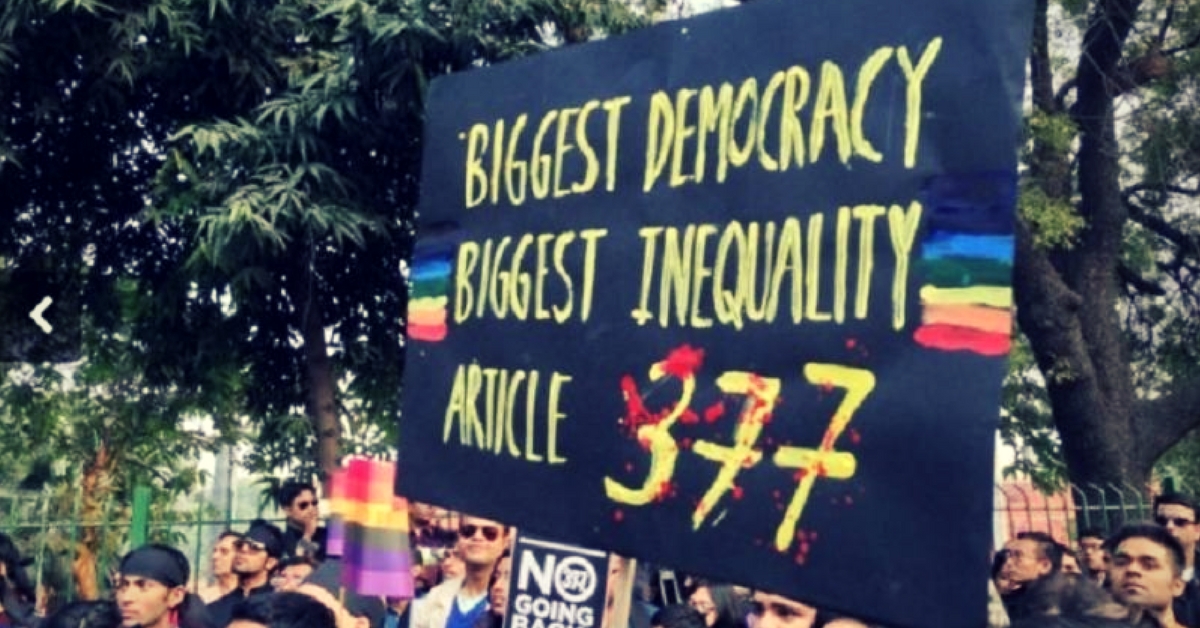
With no vaccine out yet and further hindrances in
production of any such antidote in the form of Centre's recent archaic
submissions against recognition of same-sex marriages, the Nation is falling
short of remedies yet soaring high in the number of lives affected.
Contentions
Law, Politics and Ignorance
Moreover, in a move to
save its face and ensure its hollow arsenal of outdated contentions, shall they
fail, the Centre invoked the argument of institutional competency. Stating
that, the Legislature is more capable to formulate laws in the immediate
regard, and not judicial adjudication. For a moment, ignoring the numerous
post-independence historic instances, where the legislature and executive have
failed to assert their unchecked dominance at the cost of citizens' rights,
thanks to "judicial adjudication" (though it's also pertinent to mention
the high handedness of the judicial wing in recent years as well). And granted,
that the legislature is indeed more able, the reasoning is yet again
unimpressive, as it simply fails to differentiate between legislative
competence and legislative willingness.
It's unfortunate that the party in power that
displayed a juggernaut-like zeal for crucial and needed matters such as Farm
reforms, and Abrogation of Art 370 has failed for almost a decade in its
tenure, to deliver any substance other than feel-good comments to a
marginalised section of its voters. The Centre basically said "Our Hands
are off" when it left the Navtej Johar case's decision of 2018 to
"the wisdom of the court". Fair, it didn't react as opposing to it,
but equally it didn't appreciate it either.
Though, credit where it's due, prime time news was
filled with commending spokesperson interviews, however the party didn't issue
an official statement in light of the 2018 case, which was also followed by the
silence of the Hon'ble PM.
A political party refraining to comment can be looked
over, but when a Prime Minister of a nation, that styles itself as 'The Mother
of Democracy' and fashions itself as a major global power still refuses to even
comment, while an extremist organisation like RSS comes out welcoming, that
speaks volumes about how willing and goal driven the legislature truly is.
Therefore, the Centre's case for capacity doesn't
hold water and seems to be one out of a desperate attempt to articulate
second-grade responses, considering how even the social ethos is rapidly
inclining towards acceptance, instead of one carrying real-life practical
legitimacy.
And it's not just the Centre that should be at the crosshairs. The other parties don't fare any better either. Regional parties like AAP, Shiv Sena, TMC though approved the Supreme Court's 2018 judgement, all of them are reluctant to advocate for the other important rights of the LGBTQ+ community, unless it’s time for re-election.
In words of Christ, "A house divided against
itself cannot stand". Witnessing the obliteration of once liberal,
diligent and national organisation, to a now by-gone regional dynastic party,
the expression stands as a mirror of truth in the face of INC.
This political dynamic has turned head over heels the
moral principles of the electoral process. A vote isn't just a voice anymore,
or a call for change, but an instrument to act licentiously and preserve power.
What's the conclusion? A competent legislature is an
obsolete organ without a strong legislative willingness. It's tantamount to a
government acting amidst a national crisis without any data on how it has
affected the nation, which itself carries a poignant baggage that echoes the
reality of a couple years back.
And to assume that the legislature is even a competent organ, taking note of the now routine kerfuffle by representatives of the people over political issues, that make The Speaker sweat in drips, The sessions obsolete and The Parliament inoperative, would be quite farfetched.

The Centre in its another futile attempt has
mentioned different sections of various statutes, including IPC, CRPC (Criminal Procedure Code), CPC (Civil Procedure Code),
HMA (Hindu Marriage Act), SMA (Special Marriage Act), etc. to point out the usage of vernacular consisting of terms like
'husband', 'wife', 'man', 'woman' and the like, in order to put forward the
point that marriage in eyes of law presumes a union between a biological man
and biological woman.
However, if Sec.8 of Indian Penal Code allows the
authorities and courts to also use the derivate 'He' in case of women offenders
with due regard to the circumstantial facts, why can't a same exercise be
followed for other denominations of similar nature in respect to individuals
committed in a same-sex union under the above-mentioned statutes as well?
Another factor that the Centre seems to be completely
ignorant of, is the people's mood on same-sex relations. It has been
mind-numbingly oblivious of the fact that societal ethos and standards are
ever-shifting across time. Today, the set of social beliefs is not the same as
those of, say, a couple of decades back.
This is evident by the social frowning upon practices
of Sati, Child Marriage, Triple Talaq, Child Labour, Caste discrimination,
Marital Abuse and propagation of ideas regarding Gender Equality, Social
Welfare, Mental Health, Reformative sentences to criminals, among many other
matters which aren't mentioned here, and which would take another writing in
itself if done, let alone the specific and detailed legislations formulated on
the same by this Government and those of the past.
At present, the Indian population is one of the
youngest in the world. More curious, knowledgeable, capable, rational and
accepting than it ever was in the vibrant history of this nation. The opinions
of conventional die-hards don't signify the mood of the society at large
anymore, and the sooner this realisation rings in the ear, the better. This is
not to mean that traditional viewpoints are bereft of value or any
significance, but with time, even the most pristine waters can harbour agents
of fatal diseases, if stagnant.
Conclusion
But to strip all the talk
of supposed social ethos, legal framework and political scenario out. On a
strictly moral perspective, for the people of this community, it's about the
basic right to love. To have a family recognised by the state they contribute
in, and feel one with.
For them marriage isn't an apprehension of legislative consequences bound to cause havoc, it's an expression of commitment, a welcoming of an adventurous responsibility.
 |
| Khajuraho Temple |
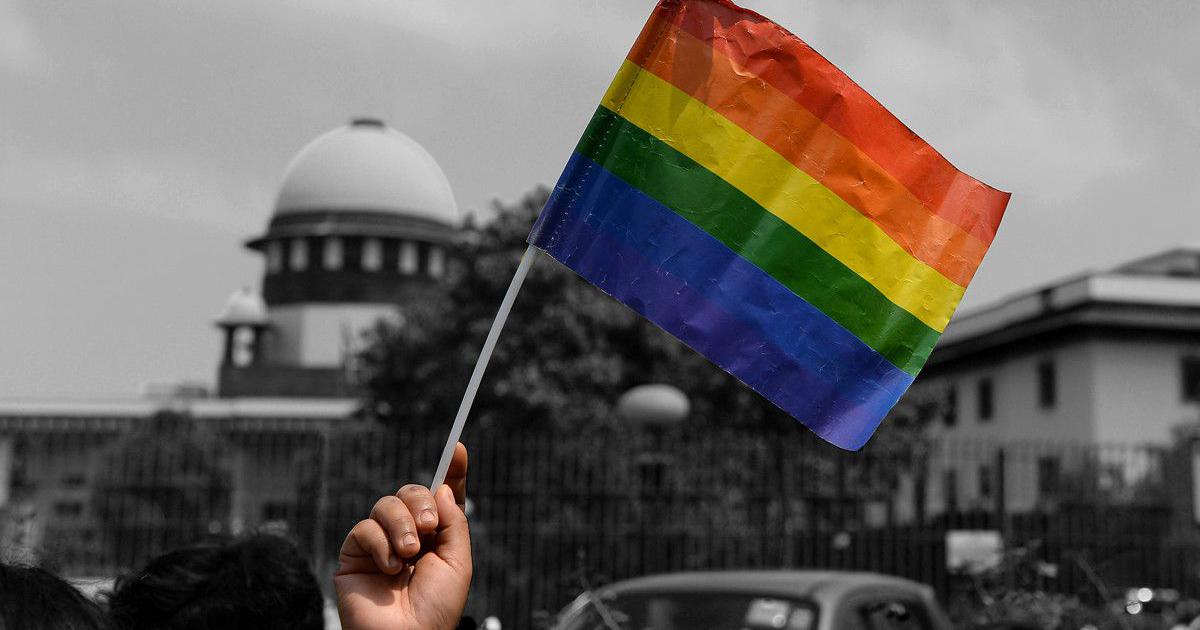
The last beacon of hope is The Supreme Court of
India, which has listed the matter for April 18 with a 3-judge bench including the
CJI.
What's does the future
have in store? It would be rash to predict. But April 18 and subsequent
hearings will certainly set off a domino effect. Whether such an effect is
soberly progressive or intransigently regressive
remains to be seen.
Authored by:
Bhavesh Arora
24th
Mar 2023

Comments
Post a Comment